NHS hiring bans on radiologists and cancer doctors double in a year despite widespread cancer delays
The number of NHS radiology departments and cancer centres unable to hire consultants due to recruitment freezes has doubled in a year, despite chronic shortages of these doctors causing widespread delays in cancer diagnosis and treatment.
Preliminary data from the Royal College of Radiologists (RCR) annual workforce census shows that, in 2025:
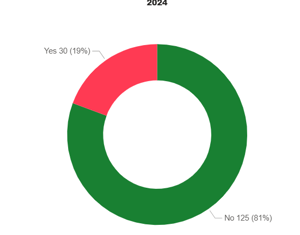
36% of radiology departments had experienced a freeze on hiring radiologists – almost double compared to 19% in 2024.
- 15% had an ongoing freeze on new radiology posts only
- 12% had an ongoing freeze on all radiology recruitment
- 8% had been subject to a radiology hiring freeze, but it has now ended
Fig.1: RCR 2025 Clinical Radiology Workforce Census: Have you had a recruitment freeze affecting radiology posts?
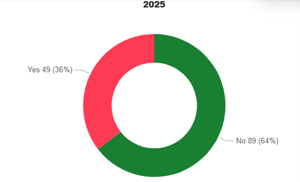
Fig. 2: RCR 2024 Clinical Radiology Workforce Census: Have you had a recruitment freeze affecting radiology posts?
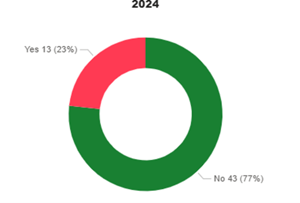
51% of cancer centres had experienced a recruitment freeze on hiring cancer doctors – more than double compared to 23% in 2024.
- 20% had an ongoing freeze on new oncology posts only
- 17% had an ongoing freeze on all oncology recruitment
- 14% had been subject to an oncology hiring freeze, but it has now ended
Fig. 3: RCR 2025 Clinical Oncology Workforce Census: Has there been a recruitment freeze at your cancer centre over the past year affecting oncology posts?
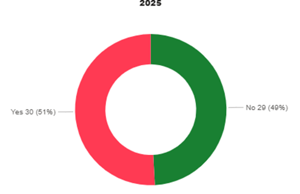
Fig. 4: RCR 2024 Clinical Oncology Workforce Census: Has there been a recruitment freeze at your cancer centre over the past year affecting oncology posts?
Recruitment freezes undermine ambitions to cut waiting lists
This dramatic increase in the prevalence of recruitment freezes comes despite a severe and chronic shortage of specialists, undermining government ambitions to tackle backlogs and delays in diagnosis and cancer treatment.
In 2024, the RCR found the UK was short of almost 2,000 (1,953) radiologists and nearly 200 (193) clinical oncologists needed just to meet current demand. Amid rising demand and increasing complexity of scans and cancer care, the shortage of doctors is a major cause of delayed diagnosis and treatment. Shortages will rise to 3,646 too few radiologists and 303 missing clinical oncologists by 2029 if nothing is done to increase the workforce.
Hospitals face significant financial pressures. However, RCR research shows that recruitment freezes are a false economy. Hiring bans may appear to cut costs in the short term, but rising demand means teams must rely on expensive alternatives to fill the gaps. In 2024, the UK spent a record £325 million on managing excess demand in radiology, including outsourcing, overtime, and locums – enough to pay 2,910 radiologist salaries. £216 million of the total sum was spend on outsourcing scans to be read by private companies. This often results in more work for NHS radiologists who have to double-check their work.
“[Staff shortages result in] heavy reliance on outsourcing - many suboptimal reports needing second reads. Heavy reliance on locum staff, with limited roles.” - radiology clinical director
Patients suffer as understaffed teams are stretched to the limit
Radiology department and cancer centre leaders have told the RCR that recruitment freezes mean they are unable to hire the doctors they need to meet rising demand. This has led to delayed diagnosis and treatment, with some patients waiting so long that their disease progresses to the extent that treatment options become more limited. Any delay in diagnosing or treating cancer is extremely worrying for patients and their families, as every month’s delay to starting cancer treatment can be associated with an increased risk of death of around 10%.
Banned from hiring permanent staff, many trusts and health boards say their reliance on costly outsourcing, locums, and overtime leads to staff burnout, retention challenges, and discontinuity of care.
Some trusts and health boards said that recruitment freezes on admin roles meant some doctors were spending more time on admin and less time on patient care, exacerbating delays for patients.
Anonymous comments from clinical leaders reveal the devastating impact of recruitment freezes on patients and staff:
“There is an effective freeze on retention and recruitment of all staff with any new post having to go through a laborious and bureaucratic Vacancy Control Process. ...I am concerned that, even though the trust has prioritised cancer performance, they fail to understand that supporting CT, in particular, and recruiting the radiologists to report the scans, attend multidisciplinary team meetings, and do the biopsies are essential if we wish to improve our cancer performance.” - radiology clinical director
“A recruitment freeze within administrative teams has also led to clinical staff covering non-clinical duties, reducing their efficiency and slowing patient throughput. This has resulted in fewer patients being seen and increased waiting times.” - radiology clinical director
“Recruitment freeze and removal of 25% of radiography and physics posts has directly resulted in a 10-week waiting time for radiotherapy.” - cancer centre leader
“Several consultants are very overworked as they have had to step in to cover gaps in medical workforce where consultants have left but not been replaced” - cancer centre leader
Dr Stephen Harden, President of the RCR, said:
“Recruitment freezes on radiologists and cancer doctors do not save the NHS money. Instead, they force hospitals to rely on expensive temporary solutions to meet soaring demand for diagnostics and cancer care. In 2024, the UK spent a record £216 million on outsourcing scan interpretation to private companies alone.
Freezes do nothing to address the chronic understaffing that has caused lengthy delays in diagnosis and treatment, too often with tragic consequences. They erode staff morale, making experienced doctors more likely to leave the NHS when it needs them most.
Patients’ health and lives are on the line. The government must support hospitals to hire the radiologists and cancer doctors they need to deliver safe, timely care.”
Notes to editors
- Media contact: [email protected] 02038054065
- The Royal College of Radiologists (RCR) is the leading professional membership body for clinical radiologists and clinical oncologists
- Clinical radiologists are specialist doctors who use imaging to diagnose, monitor and treat diseases and injuries
- Clinical oncologists are specialist doctors who manage cancer and prescribe drug-based treatments and radiotherapy
- Find out about the RCR’s work to influence the National Cancer Plan.
- Preliminary data from the RCR 2025 Clinical Radiology Workforce Census (which will be released in full in summer 2026) shows that in 2025, 36% of radiology departments had experienced a freeze on hiring radiologists – almost double compared to 19% in 2024. This is based on responses from 87% of UK clinical directors of radiology departments (representing 138/160 UK radiology departments).
- Preliminary data from the RCR 2025 Clinical Oncology Workforce Census (which will be released in full in summer 2026) shows that in 2025, 51% of cancer centres had experienced a recruitment freeze on hiring cancer doctors – more than double compared to 23% in 2024. This is based on responses from 100% of UK cancer centre heads of service (representing all 60 UK cancer centres).
- In 2025, 60% of UK cancer centres in rural or deprived areas experienced a recruitment freeze, versus 48% in urban or less deprived areas.
- The NHS is under financial strain. The King’s Fund estimate that the recent Budget settlement, a 2.4% real terms increase for health and social care, falls short of what is needed to substantially improve services.