Regulations for the Exams for the Fellowship of the Royal College of Radiologists in Clinical Radiology
Purpose of the FRCR Exam
The primary purpose of the FRCR exam is to form a major part of the assessment system as defined in the UK specialty training curriculum for clinical radiology.
The exam also serves a number of subsidiary purposes:
It is the main entry point to membership status of a Fellow of the RCR, giving rights in relation to voting and standing for office.
It provides an aspirational standard for doctors around the world, supporting high quality patient care.
It can be used by doctors who trained outside the UK as a means of entering the General Medical Council’s (GMC) Medical Register (i.e. an alternative to the GMC’s PLAB test).
It can be valuable evidence to support an application for entry to the GMC Specialist Register via the equivalence process (CESR).
Because of their role in UK training all FRCR exams must meet rigorous quality standards set by the GMC.
Overview of the Exam
The award of the Fellowship diploma requires the completion of all the elements of the exam. Currently the components are:
First Part
The First FRCR exam comprises two independent elements: physics and radiological anatomy.
There is no requirement to attempt or pass the First FRCR elements in a particular order, nor any restriction on the number of elements that can be attempted at a single sitting. Candidates need to pass both parts in order to be deemed to have achieved overall success in the First Part.
Final Part
The Final FRCR exam is in two parts: Part A and Part B.
Part A assesses knowledge of the pathology, imaging techniques, congenital abnormalities and radiological findings that underpin clinical radiology practice. It is examined by two single best answer question (SBA) papers.
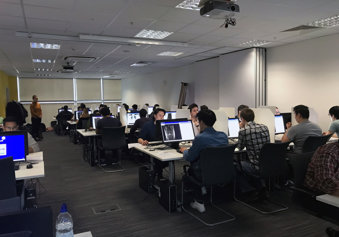
Part B exam assesses aspects of a candidate’s radiological skills, all of which are considered necessary for safe and effective radiological practice. The three components (two reporting sessions two and an oral exam) are presented digitally on a computer workstation.
Eligibility
Medical/Dental Experience
Medical candidates must hold a primary medical degree (e.g. MBBS, BMBS, MBChB, MBBCh) awarded by an institution recognised by the World Directory of Medical Schools. Candidates who are not members of the RCR will be required to provide evidence of this. No specific duration of clinical (non-radiological) experience is required to enter the exams.
Candidates must be in a training post in clinical radiology, or a related medical discipline such as nuclear medicine or breast clinician training, or must have held such a post in the past.
The physics exam is also open to dentists training in dental radiology. Candidates must hold a primary dental degree and be registered to practise as a dentist by a regulatory body.
Time in Training
Some parts of the exam require minimum time in training as defined below. These minimums apply to UK resident doctors in a formal training programme (i.e. with a national training number). Other candidates with varying experiences of training may attempt exams but should be guided by these timings as to the extent of training required to be successful.
All periods of time specified in this document are whole time equivalent (WTE).
Absence on sick leave or parental leave reduces the time spent in specialty training and may affect exam eligibility. The interpretation of this will be guided by the GMC’s position statement that “within each 12-month period where a trainee has been absent for a total of 14 days or more (when a trainee would normally be at work), this will trigger a review of whether the trainee needs to have their CCT date extended”. If in doubt, candidates should contact the Exams Office prior to applying online, to ascertain their eligibility for the exam.
Entry to Part 2A
Candidates must have spent at least 22 months in a relevant training post by the month during which the exam is taken and have passed all parts of the First FRCR exam prior to entry.
Entry to Part 2B
Candidates must have spent at least 32 months in a relevant training post by the month during which the exam is taken and have passed the Final Part A exam prior to entry.
Candidates who fail Part 2B will be eligible to re-sit at the second sitting after the failed attempt, or after 6 months (whichever is shorter).
Exemptions
No exemption is granted from any part of an FRCR exam on the basis of experience or other qualifications.
Confirmation of Training
Candidates who are undertaking specialty training in the UK must obtain support from their Training Programme Director (TPD) prior to applying for any exam and must declare this on application. By confirming on application that the exam regulations have been read, candidates in UK training are confirming that they have TPD support.
RCR Membership
Those undertaking specialty training in the UK are required to be enrolled with the RCR, to maintain membership throughout their training and must be up-to-date with their subscription in order to enter any part of the FRCR exam.
Candidates with constraints on their practice
Candidates who have been erased the GMC or GDC register (or that of an equivalent international body) for reasons related to fitness to practise are not permitted entry to any RCR exam.
Candidates who are suspended from practice by the GMC or GDC (or equivalent international body) and/or their employer are not permitted entry to any RCR exam until the suspension has been lifted.
Currency of Exams
Limits on Attempts
Candidates will be permitted a maximum of six attempts at any FRCR exam (as specified by the GMC). No further attempts will be allowed, other than as defined in the following paragraph.
If a candidate receives a new or changed diagnosis for a pre-existing condition leading to a change in the recommendation for adjustment, and this is accepted in accordance in our reasonable adjustment policy, then previous failed attempts will be annulled and the number of remaining attempts calculated accordingly.
Cancelled exams or candidate withdrawal will not count towards this limit.
The decision of the RCR will be final when deciding whether to permit a candidate a further attempt.
Limits on Time
Both components of the First Part exam must be completed within four years of passing the first successful component.
Once a candidate has completed all elements of the First Part exam they will be allowed entries to the Final Part A for the next seven calendar years. After that time candidates will be required to re-sit all or part of the First Part.
Once a candidate has completed the Final Part A exam they will be allowed entries to the Final Part B for the next seven calendar years. After that time candidates may be required to re-sit the Final Part A.
When any changes are made to the structure of the overall exam a plan will be published on how it will impact on those part-way through and whether they would need to return to any earlier stages. For UK resident doctors any decisions on this will be subject to the requirements of the GMC for them to work to the latest curriculum, but we would aim to minimise the impact.
Language
All parts of the FRCR exam are conducted in English. Candidates’ English language ability should be equivalent to International English Language Testing System (IELTS) Level 7.5. However, candidates do not need to have taken IELTS or other language test or provide any evidence of language ability in advance.
Applying for Exams
Managing Applications
Candidates must book, cancel or reschedule exams using the methods and associated guidance published on the RCR website.
Bookings will close at least eight weeks before an exam date and late entries will not be accepted.
Entry fees must be paid at the time of booking an exam.
Refunds and Reschedules
The RCR’s published refund and reschedule policy provides a means for candidates to reschedule and withdraw from exams.
Candidate Identification
Candidates who are registered with the GMC or GDC must enter the exam using the format of name in which they appear on the relevant register. Candidates who are not registered with the GMC or GDC must enter the exam in the name that appears on their passport. Candidates must use exactly the same format of name each time they enter any part of the FRCR exams. Candidates are required to bring photographic identification to the exam. Acceptable documentation is a passport, national identity card, driving licence. For candidates attending an exam outside their country of residence a passport is expected. Details on identification documents must match those supplied at application.
Candidates who change their name can register this change with the RCR by supplying a copy of their passport. If candidates want to sit the exams under their professional name but their ID has a different married name, they should bring a copy of their marriage certificate as well as their photo ID to the exam.
Prioritisation of Candidates
Priority access to booking will be grouped by three categories:
Applications for membership must be completed before booking exams.
The RCR wishes to encourage candidates to become members of RCR, and priority access and reduced fees for exams are a valued membership benefit. These benefits are only available to members who are in good standing (with no outstanding fees) and whose membership is continual and ongoing. Members who are not in good standing (either with outstanding membership fees or those who have cancelled their membership) will not be able to access these membership benefits. If a candidate cancels their membership before taking an exam, or within a year of having taken an exam using the reduced fees reserved for members, they will no longer be eligible for these benefits and this may result in needing to re-book the exam using the standard fee or the distribution of exam results being delayed until fees due are settled or any membership issues are resolved.
The RCR reserves the right to adjust priorities for access to specific exam sittings from time to time, where circumstances require this.
Candidate Responsibilities
By applying for an FRCR exam, candidates are confirming that they have read and understood, and will abide by, these regulations, the code of conduct and associated guidance issued by RCR staff and via the RCR website. Changes to the regulations, content and format of the exams are made from time to time and candidates should check the details each time they attempt any part of the exam.
Curriculum
Candidates are examined against the latest Specialty Training Curriculum for Clinical Radiology and should familiarise themselves with the curriculum and supporting documentation prior to making an application.
Wellbeing
It is the candidate’s responsibility to ensure that they are physically and mentally fit to sit the exam. Should a candidate feel unwell prior to the start of the exam, they should inform an invigilator and consider withdrawing from the exam.
No special recognition will be given to candidates on the basis of ill-health at the time of the exam and the appeals policy is clear that “personal circumstances (such as ill-health, personal issues) affecting performance” are not a valid basis for an appeal.
Candidates should be aware of their responsibility to take into account any risks that their own health may pose to others, such as other candidates, examiners and invigilators.
Visas
Candidates who need a visa to travel to an exam should ensure they allow time to apply for this.
Refunds of entry fees after the booking closing date will not be given because of failure to get a visa.
Reasonable Adjustments
The RCR’s published adjustments policy provides a formal means for candidates to submit a request for an adjustment to be applied in exams (such as extra time) to compensate for disability. Candidates wishing to make use of this are advised to pay careful attention to the documentation requirements and to submit requests with as much notice as possible.
Cancellations
Exams will only be cancelled (whether an entire sitting or a specific venue) if completely unavoidable. An exam could be cancelled by the RCR due to force majeure, including but not limited to any of the following:
Adverse weather and other natural disaster (including fire, flood, earthquake, storm, or hurricane)
Governmental act, war, explosion or accident, civil commotion, armed hostilities, act of terrorism, revolution
Effects of an epidemic, pandemic or other outbreak of disease on health services
Blockade, embargo, lock-out or other industrial dispute
Breakdown of systems or network access
Act or intervention of any competent judicial or regulatory authority
Any other event (including without limitation any act or omission of any third party) beyond our reasonable control that could be reasonably planned or avoided.
In the event of any exam being cancelled, the RCR will fully refund all candidates entry fees but will not be responsible for any other costs candidates may have incurred, such as travel or accommodation.
Candidate Conduct
Behaviour
Candidates are expected to behave in a professional and respectful manner throughout all RCR exams, as defined by our published code of conduct.
Allegations of failure to adhere to this code of conduct may lead to an investigation and sanctions as defined by our misconduct policy.
Start and End Times
To ensure exam security is maintained, candidates may be quarantined before or/and after an exam. Candidates should note the arrival time provided on their timetable and follow the instructions of the invigilator at the venue.
Candidates are not normally allowed to leave exams before the designated end time.
Food and Drink
Candidates are permitted a still (non-carbonated) drink on their desks during the written components of the exam. Candidates with special needs requiring them to eat during the written exams should advise the RCR of this when submitting their application.
Partial Attendance
For multi-part exams (2A, 2B), there may be situations where a candidate misses one or more component.
Where an earlier component is missed, e.g. due to late arrival, candidates will be allowed to attend the subsequent components to gain experience.
Where candidates need to withdraw part way, e.g. due to ill-health or other personal circumstances, they must notify the invigilators or the Exams Office.
In either case the attempt will be nullified and no result will be awarded. A partial refund may be given at the discretion of the Exams Office.
Results and Feedback
Results
Results dates are published at the same time as booking dates.
Results for all candidates will be made available to them online, individually, via the Exam Hub. Individual results information will be sent by email after the results have been uploaded into the Exam Hub. All candidates will receive details of scores achieved and the level of performance that was required to achieve success.
UK training programme directors and regional advisors will receive information on the performance of their resident doctors via the RCR e-portfolio.
Full lists of passing candidates will not be published.
The RCR reserves the right to delay or withhold results if the security of an exam is deemed to have been compromised or there are significant suspicions of academic misconduct by a group of candidates.
Candidate Feedback
Feedback to candidates will be provide in accordance with our feedback policy. The form and extent of this feedback will vary according to the nature of the exam and what it is practical to provide.
Incidents and Appeals
Incident Forms
If candidates experience an untoward incident that may have affected their performance (e.g. IT problems, major disruption) they should record this on an incident form, either at the venue or within 48 hours following the exam via the Exam Hub, detailing the issue experienced and the associated impact. This will be needed should they subsequently wish to lodge an appeal.
Appeals
Candidates who have been unsuccessful can appeal against their fail result. This allows candidates to challenge their fail result on the grounds that it is incorrect for some reason other than the marks being at fault. Appeals are only deemed valid on procedural grounds - the appeals procedure provides more information on acceptable grounds for appeal.
Admission to the Fellowship
Successful candidates in the Final FRCR Part B exam become full Fellows of the RCR and are eligible to use the relevant designation FRCR. In order to preserve the entitlement to use the post-nominals, those who have been admitted to the Fellowship must maintain good standing with the RCR through continued payment of the annual membership subscription.
Postnominals other than FRCR, such as FRCR(1), to indicate passing of parts of the exam, are not recognised by the RCR and should not be used.
Awards
The Frank Doyle Medal is awarded at each sitting of the Part 2A exam to the candidate achieving the highest score across both papers at the first attempt.
The Gold Award is awarded at each sitting of the Part 2B exam to the candidate achieving the highest score across all components at the first attempt. In the event of more than one candidate achieving the same overall score, the award will be given the best performer in the oral components.
Last updated August 2026