AI in radiology: The skill every resident needs
Article by: Professor Susan Shelmerdine
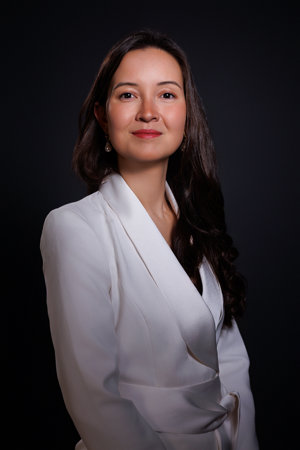
Professor Susan Shelmerdine, Consultant Paediatric Radiologist at Great Ormond Street Hospital, shares her insights on AI – and why governance may be the most important skill residents need to develop.
How did you first get involved in AI in radiology?
Back in 2020, when the hype around AI was at its peak, I became curious about what my colleagues actually thought. For example, were they using these tools, avoiding them, or worried about them? I designed a Europe-wide survey to canvas the views of the paediatric radiology workforce, which became a published paper and ultimately led me to set up and chair the AI Taskforce at the European Society of Paediatric Radiology.
The Taskforce gave us a forum to learn, debate and educate members on a topic that was moving faster than our training and guidelines could keep up with. Off the back of all this work, I was awarded a postdoctoral research grant from the NIHR, which is where I started collaborating in earnest with computer scientists, data scientists, engineers and clinical colleagues on building and validating AI models.
You’re presenting at the RCR’s Global AI Conference 2026 – could you tell us about your session and what delegates will gain from attending?
I'm co-leading the Future Ready AI stream and chairing several sessions alongside a strong line-up of speakers. Last year this stream ran as AI and Society, focusing on ethics and societal impact – topics that remain as relevant as ever. This year, we wanted to keep that thread but widen the lens to include the latest innovations and a stronger oncology focus, so attendees leave with both the philosophical grounding and also the horizon-scanning they need.
A few sessions I'm particularly looking forward to are on areas I'm less familiar with myself but I suspect will dominate the next few years of conversation: green and quantum computing, ‘hidden AI’ (the behind-the-scenes work AI is doing to improve workflows), and theranostics and the future of oncology drug development.
Alongside these, we've kept some of last year's timeless themes – such as clinical AI leadership, multimodal data use, and public and patient attitudes towards AI – but with new and updated speakers, including some of the UK's leading voices from both the clinical frontline and from deep engineering and technical backgrounds.
Where do you see AI currently making the most difference to patient outcomes in clinical radiology?
If we go back to first principles, good health is about three things: not getting ill in the first place (prevention), catching illness early when it does occur (early detection), or, failing that, finding effective treatments and making long-term conditions manageable. At every stage, the biggest issues that irritate both patients and staff seem to centre around navigating complexity (of information and systems – such as where to get help or what help is needed) and tackling system bottlenecks.
If we look at these meta issues through a radiology lens, I think AI’s role here will be best served by helping patients move through imaging pathways faster and more appropriately – ensuring the right people who need imaging get the right type of imaging at the right time – triaging referrals to the appropriate specialists who can actually help or report the type of case that’s been done, prioritising worklists and flagging critical findings for action (for example, the flagging needs to be piggybacked to something downstream, not just for attention for its own sake) and ultimately, reducing the friction that exists between accessing imaging and receiving definitive treatment.
Much of the AI that will enable this friction to resolve will be related to workflow matters over better diagnoses (for now); however, with increasingly complex multi-diagnoses, new treatment regimes and their complications, that may change.
What’s one AI related skill you think every resident should start developing now?
Governance. As more AI tools enter the healthcare system, we will need rigorous post-market surveillance, ongoing monitoring and clear processes for what happens when things go wrong – and we simply don't have enough people with the skills to do this meaningfully at scale.
Most of this work (risk evaluation, understanding clinical impact and judging how a tool sits within a wider clinical pathway) needs leaders who genuinely understand clinical work and healthcare system processes. That makes it a strong place for residents to build expertise early that will endure and won’t disappear in the next year when new technology arrives.
What’s one thing residents can do now to feel more confident engaging with AI in their day-to-day work?
Talk about it – openly. Discuss use cases, frustrations and the kinds of solutions you'd actually want to see in your own practice. Go to conferences, meet the people working at the cutting edge, and listen carefully to those building and deploying these tools.
The literature is useful but inevitably lags behind – AI moves faster than peer review. The best way to develop an informed, confident view is to be in the room with people doing the work.
What’s one common misconception about AI in radiology you’d like to challenge?
There are several worth naming – it’s hard to pick one.
The first is that AI will magically make everything better. Sprinkling AI fairy dust over existing workflows doesn't fix them. What AI does, more powerfully than any technology before it, is scale – and it scales whatever is already there. If your local systems are broken, your team is disengaged, or the underlying infrastructure is missing, AI will amplify those problems rather than solve them. There is no silver bullet. Meaningful integration requires patience, trial and error, and a willingness to iterate before you see results.
The second is that AI will take our jobs. It will, if you let your work be commoditised. But radiologists bring nuance, context, judgement, awareness of the wider clinical picture and relationships with the colleagues who actually act on our reports. That human contribution is significantly undervalued. If you over-identify with the report itself, you are vulnerable. If you focus on moving healthcare forward in whatever form is most useful, you will always have a role.
The third – and this is one I push back on a lot – is that AI literacy is the single most important skill to develop. It is, and it isn't. Yes, you need a working understanding of what these tools can and can't do. But what will make you genuinely invaluable is your understanding of healthcare systems: what's working, what isn't, and how to critically evaluate whether any new tool (AI or otherwise) will actually work in your organisation and – if it has potential – then the ability to do the change, behaviour management and workflow reconfigurations needed. That kind of judgement and know-how is much harder to replace than technical fluency and it isn’t well taught.