A resident’s guide to AI in radiology
Article by: Dr Michael Adofo Kwakye
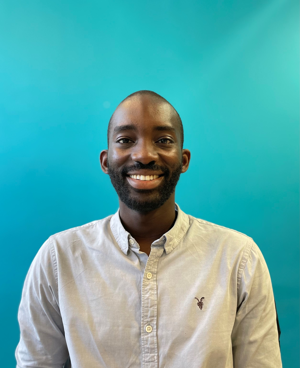
Dr Michael Adofo Kwakye, ST4 Interventional Radiology Registrar at Medway Maritime Hospital, shares his experience of undertaking an NHS AI Fellowship and his views on where AI will have the most impact on radiology and patient care in the next few years.
Could you tell us about the AI fellowship you’re currently undertaking and what it involves?
The NHS Fellowship in Clinical AI is a 12-month programme undertaken part-time alongside clinical work, focused on the development, deployment and evaluation of AI tools in healthcare. Fellows are recruited from a diverse clinical workforce across England, Scotland and Wales. They work under expert supervision of local AI champions with extensive experience in developing clinically useful AI systems and deploying them at scale. There are a wide range of projects across different regions and clinical settings, with a significant proportion relating to radiology.
What sparked your interest in AI, and what made you decide to pursue a fellowship alongside your radiology training?
Like most radiologists, I had become increasingly aware of the growing role of AI in day-to-day clinical practice. I became interested in understanding the decisions involved in developing AI systems, how these systems are built, the steps required to deploy them safely in healthcare settings and the monitoring required thereafter. As a result, I approached a consultant colleague working on deploying a PE detection algorithm locally, which further sparked my interest and ultimately convinced me to apply for the fellowship.
In addition, I recognised the value of developing technical coding skills through the fellowship, as well as an opportunity to build a strong professional network of like-minded colleagues.
What skills or perspectives have you gained so far that you didn’t expect when you started?
The most valuable skill I’ve gained so far has been a much clearer understanding of the full lifecycle of an AI product – from initial concept and data preparation through to model development, validation, deployment and ongoing monitoring in clinical practice. As a radiologist, it’s easy to think of AI as something that simply ‘works’ or ‘doesn’t work’ at the point of use, but the fellowship has highlighted how many steps sit behind that, and how to navigate that process.
A perspective I hadn’t expected to develop in such depth was around regulation, particularly the process of obtaining certification for the AI device used in my project.
What advice would you give to residents who are curious about AI but aren’t sure where to start?
If you’re curious about AI, I’d say the easiest entry point is to look for a local AI champion or group in your hospital – there are usually projects already running that are keen for residents’ input and clinical knowledge. Don’t be put off if you don’t have coding experience; that’s often what people worry about most, but in reality there’s a lot you can contribute as a clinician just by bringing clinical insight, asking the right questions and being willing to learn. Enthusiasm and a bit of curiosity go a long way, and the technical skills can be built over time once you’re involved.
Where do you see AI having the most meaningful impact on radiology and patient care in the next few years?
AI is already starting to have a meaningful impact on radiology and patient care, and I think that will only accelerate over the next few years. We’re already seeing it used in triage and prioritisation of urgent studies, helping ensure that patients with the most serious conditions are reported sooner. There’s also growing evidence around AI-assisted reporting in areas like breast mammography and plain film abnormality detection, which can improve workflow efficiency and free up radiologist time for more complex work. Another exciting area is radiomics, where we may eventually be able to extract far more insight from imaging data than we currently do, potentially linking previously unknown imaging features with diagnosis, prognosis and treatment response.
At a more cutting-edge level, the team I work with on the fellowship are combining AI with robotics in interventional radiology, which could significantly change the way we perform procedures, akin to how the Da Vinci robotic surgical system has done in some surgical specialties.
Of course, while all of this is exciting, there are important challenges to consider, including medicolegal responsibility, regulation, and how AI may reshape radiologist workload and roles within our specialty. For all these reasons, I believe clinicians – and radiologists in particular – must be an essential voice in shaping how these tools are developed, validated and ultimately deployed in clinical practice.