Our specialties
Exams & training

Member benefits

View

Exam quality policy

This page describes the ways in which the RCR works to ensure and demonstrate that its exams are robust and fit for purpose. More details on the specific content, format and approaches to standard setting and quality assurance are provided on the RCR website for individual exam components.
Exams

Governance

Each component of the exam (e.g. FRCR Part 1 Anatomy for clinical radiology) has a governing board or committee to oversee the detail and content of that component.

Each qualification (i.e. the totality of FRCR for clinical radiology and clinical oncology) is governed by a Fellowship Exam Board, comprising representatives from each component as well as an elected RCR officer, senior RCR staff and a lay member.

The Fellowship Exam Boards are responsible for ensuring that the FRCR exams are appropriate assessments of specialty resident doctors' knowledge and skills in line with the approved UK curriculum and that the exams comply with the standards for assessment required by the General Medical Council (GMC).

Appointment of Examiners

For the purpose of this document, “examiners” is used as a term to describe anyone (excluding RCR officers and staff) who is a member of a board or committee responsible for: setting policy; creating, reviewing and selecting exam content; setting the required standard, marking responses; conducting oral and clinical exams; reviewing exam performance.

Examiners are collectively responsible for ensuring that the exam provides an appropriate assessment that: meets the assessment requirements of the UK radiology training curriculum; meets the standards set by the GMC and is demonstrably fair and reliable.

Examiners are appointed based on clear criteria and job descriptions and selected using an objective scoring process. Examiners with particular expertise will be sought to fill the needs of each committee at any given time.

Most examiners are experienced consultant radiologists or clinical oncologists. We also recruit other experts to provide relevant input, including medical statisticians, cancer biologists and medical physicists working in a relevant field. All examiners are unpaid contributors and give their time voluntarily to support the maintenance of high standards of training and patient care.

On appointment, examiners are given training and induction to their role. They are required to comply with the RCR’s Contributor Code of Conduct.

Final Part examiners have mentoring and supervision provided. All examiners’ work is subject to peer review by colleagues as part of our normal operating procedures.

Exams office

The RCR employs a substantial team of permanent staff with extensive experience and expertise in the administration, operation and quality management of exams.

External Review And Approval

All FRCR exams have been approved by the GMC as meeting the standards defined in Excellence By Design and supporting documentation. Any changes to exam formats, marking systems, standard setting etc. must be approved by the regulator before they can be implemented.

From time to time, we also call on medical assessment specialists and external psychometric expertise to review and/or advise on exams.

Pass rates for the last five years, broken down by UK and global candidates, are published on our website for all exams.

We regularly share good practice in examining with other royal colleges and through the Academy of Medical Royal Colleges.

Content

All exam content is based on the published UK specialty training curricula for clinical radiology or clinical oncology. These curricula have been approved by the GMC, and the FRCR exams form a vital part of the defined assessment programme for the specialty.

Exam questions and content are subject to review and editing by multiple examiners to ensure that they are relevant, fair, unambiguous and set at a suitable level. The selection of content to form an exam is subject to the same level of review and final proof-reading.

Where questions are based on images, examiners and staff check these to ensure that they are suitably clear and fit for purpose.

Questions may be re-used in later exams with a suitable time lapse but will always be reviewed to ensure that they are still relevant and correct.
Standard Setting

Recognised methods of standard setting are used to define the passing standard for each sitting of an exam, based on the content used in that sitting. This takes account of candidate performance in the exam alongside judgements made by standard setters. Pass marks and pass rates may, therefore, vary from sitting to sitting.

More details are provided on our website for individual components.

Quality Assurance

After each sitting, and prior to results publication, a group of staff and examiners conduct a statistical review of the question paper performance and quality control checks to make sure all the questions and answers are fair. This analysis allows us to ensure that the exam is reaching optimal levels of reliability and fairness. Poorly performing questions are scrutinised and are removed if error or ambiguity is found. If any questions are removed from an exam, then the pass mark is adjusted accordingly. All exam results are checked by RCR staff before being published to candidates.

Exam boards are provided with summary information about cohort and sub-group performance and trends over time to allow them to ensure that standards are being maintained at the right level and to identify any weaknesses.

Candidate Resources

We provide online resources to assist candidates in preparing for exams. These include written explanations of formats and content, sample questions, practice access to systems, videos etc. The intention is that candidates should be assessed on the underlying knowledge and skills expected and not their familiarity with the exam format.

Continuous improvement

We continually monitor and strive to improve our exams in order to maintain quality and relevance, improve the candidate experience and minimise costs.

Equality, diversity and inclusion (EDI)

The RCR has a moral and legal duty to ensure that exams do not unfairly discriminate against any candidates on the basis of protected characteristics such as gender and ethnicity. Performance data is monitored on this basis, where relevant candidate information is available. In doing so the main focus is on the performance of UK resident doctors as this group will have had similar experiences of training and exposure to working in the UK. For overseas candidates we have little knowledge of their training, experience and language ability.

Our ambition is that the gender and ethnicity make up of our examiner body should reflect that of our wider Fellowship. Data on this is collected as individuals are appointed (though our historical record is incomplete). Analyses of the data are shared with the RCR’s EDI Committee as the basis for making decisions on whether targeted action is needed during recruitment.

Exam help & guidance

Help on using the Exam Hub, booking exams, and more. 

Find out more

Our exams

Find out more about our FRCR exams in clinical radiology and clinical oncology, and DDMFR exams in dental and maxillofacial radiology.

RCR exams
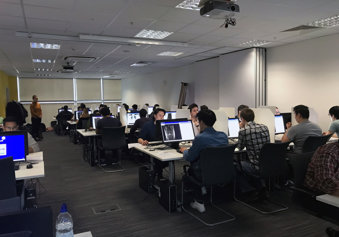
Exam candidates at an exam sitting