From clinic to lab: How to get involved in an Out of Programme activity
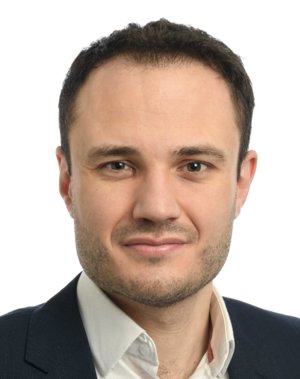
Article by: Dr Edward Phillips
With a longstanding interest in cancer biology, Dr Edward Phillips was inspired to embark on an Out of Programme (OOP) activity. In this feature, he shares insights into his wet lab project, the application process and the challenges he overcame along the way.
Could you tell us about the OOP activity you’re currently involved in?
I’m a clinical research fellow (CRF) at Imperial College. I’m funded for three years via the CRUK Convergence Science Centre which is a partnership between the Institute of Cancer Research and Imperial. My project focuses on transcriptional inhibitors, particularly CDK12. It’s a wet lab project based in the Ali/Buluwela lab.
What inspired you to pursue an OOP activity?
I was always interested in the biology of cancer since medical school. I enjoyed my earlier research experiences and felt drawn to research long term. I preferred the idea of doing translational research over clinical research, so a lab based CRF seemed the right fit.
How did you find out about the opportunity?
There are a lot of different schemes for CRF funding. As oncologists, we are well suited to applying to CRUK schemes, which I learned about from speaking to colleagues. These are well-regarded schemes and offer fully funded CRFs across various centres.
What was the application process like?
For the application, about 12 projects are pre-vetted at the host institutions (ICR and Imperial) as being appropriate cancer-related projects. Candidates are then invited to apply and outline which projects they are interested in. You will then usually be invited to have an informal chat with the project lead for those of interest where you will both rank your preferences. This is used to match a single individual to each of the 12 projects. You will then produce a formal proposal with your supervisor. Around half are invited to interview and two to three projects are funded in each round (two rounds per year). The interview panel mainly comprised clinician scientists across the institutions.
Could you describe your current role and what a typical week looks like as a wet lab-based PhD fellow?
My week varies, but the bulk of the time is spent in the lab doing experiments. This week I had a ‘Work in Progress’ seminar where people in the division of cancer present their current work internally as well as via an online seminar, alongside meetings with my supervisor and one of our collaborators.
Lab work is more flexible. For example, on Monday I made DNA from some cell lines I generated and sent it for sequencing. On Tuesday and Wednesday, I performed a technique called a Western Blot to look at protein expression in some other cell lines. I spent a lot of time looking after and preparing the cells for experiments. There is also a lot of data analysis which typically I would do in between experiments.
What were the main challenges you faced in arranging your OOP, and how did you overcome them?
The biggest barrier is securing funding. You need a CV that reflects your interest in research, and you have to be able to get your head around the project so that you can talk about it at the interview. Many people apply for CRFs several times before being successful.
There was also a lot of admin and paperwork to get approval by the deanery and training programme. However, for research-based OOP at a university or NHS trust this shouldn’t be an issue. There was also a suggestion that I should take the CO2B exam before going OOP, which is difficult to sit before ST6. However, the CRFs won’t accept ST7s and require applying a year in advance which makes the timing difficult.
There is sometimes a perception that clinical oncologists should focus on radiotherapy and avoid research into new systemic therapies. I heavily disagree with this and thankfully, academics and clinician scientists, who sit on the interview panels, do not share this view.
Were there any aspects of the process that surprised you or that you wish you’d known in advance?
Some projects had preferred internal candidates, which was frustrating. I would also not underestimate the amount of work involved in completing the application which can be challenging while working clinically.
What skills or insights have you gained from working in a research environment compared to clinical training?
I have learnt a lot of lab skills and techniques, although if I return to full time clinical work these will not be directly transferable. However, I’ve developed a lot of insights into the biology of cancer and drug development that would be helpful clinically.
What advice would you give to other residents considering an OOP for research?
It is important to not do an OOP, particularly a CRF aimed at future clinician scientists, if you are mainly doing it to boost your CV or take a break from training. You need to spend a long time evaluating the projects to see if you are convinced by it and happy to invest three years. For success at interview, you must be fully behind the idea and stronger projects are more likely to be funded.
What are your hopes for the impact of your research on patient care or the wider field?
We all hope our research will have a big impact and improve patient outcomes. In reality, it takes many people, many years, to develop – and probably a dose of good luck too. What I hope is that we can explain a small piece of the puzzle, laying the foundation for new or better targeted treatments for patients in the future.