CO2B exam tips from a Gold Award recipient
Article by: Dr Robert Monfries
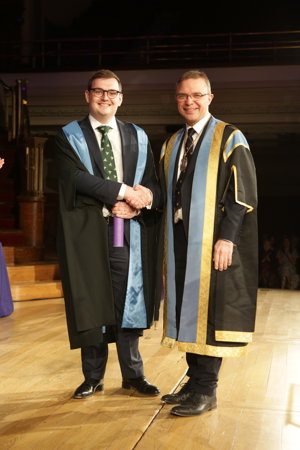
Dr Robert Monfries, an oncology resident at St Bartholomew's Hospital, won the Gold Award after passing the CO2B exam in June 2025. The Gold Award may be presented to an outstanding candidate at each sitting of the CO2B exam.
Dr Monfries shares his top tips for candidates sitting the exam in the next six months and how to manage nerves on the day.
What single habit had the biggest impact on your CO2B preparation?
Making time at work to practise with colleagues and consultants, and being willing to ask them for help. When everyone is busy, it's easy to feel like you're bothering people by asking for practice sessions, but the vast majority of peers and seniors were more than happy to help and provide feedback.
It can be nerve-racking, especially at the start, but practising with other people is one of the best ways to recreate the pressure and nerves you'll feel on the day.
What are your top three tips for someone sitting the exam in the next six months?
Start early but pace yourself.
I started preparing about six months before the 2A exam but only did relatively small amounts each week for the first two to three months. You don't want to burn out just as the exam approaches. To keep myself motivated early on, I focused on the tumour sites I was seeing in my current rotation, then gradually expanded from there.
Focus on 2A first.
Although there's a lot of overlap in content, the way you prepare for 2A and 2B is completely different. Spend the months before 2A building your knowledge base, and don't worry too much about 2B until you've passed.
Once you've passed 2A, stop revising and start practising.
Traditional revision and learning new facts are now less important, and your time is much better spent doing viva practice and mock exams. If you've passed 2A, you already have the knowledge – now you need to develop how you interpret questions, consider your options and structure clear answers. That only comes with practice and repetition. I also found it helpful to create my own mnemonics rather than using someone else's, as they were easier to remember.
What surprised you most about preparing for or sitting the CO2B exam?
How much easier it was to study if you were doing it with other people. Find a revision partner – you don't need to work together, as you can meet remotely. Having someone alongside you keeps you motivated, gives you regular feedback and makes the whole process much more enjoyable.
I had two partners for daily revision (so at least two of the three of us would be free), as well as meeting every now and then with a larger group to go through questions and make mocks for each other. I couldn't have done it without them, and it was an amazing experience going to the admission ceremony together when we passed!
How did you manage nerves on exam day?
Everyone manages nerves differently. For me, it started with a good breakfast and listening to a podcast on the way to the exam centre to keep my mind occupied. In the quarantine room, I brought revision notes, but I mostly tried to relax instead. I brought a Sudoku book and a pack of cards. I also found chatting to the other candidates helped settle my nerves, although I appreciate that won't suit everyone.
Before each session, I'd take a few deep breaths, remind myself that the examiners genuinely want candidates to do well and walk into the room with confidence.
How did you structure your revision for the CO2B exam – and what worked best?
In the final couple of weeks, I aimed to do at least one viva practice session each day at work with a colleague or consultant. In the evenings, I'd usually do one or two sessions with my revision partner, covering a couple of topics at a time. When revising on my own, I spent time working through contouring cases using an online contouring atlas.
My 2A revision was very structured – I worked through each tumour site systematically, making notes and finishing each day with MCQs. My 2B revision was much less structured. I deliberately mixed topics to better replicate the exam, where you never know what will come next. As I went, I kept a running list of topics I wanted to revisit, and I'd try to tick off at least two or three of those each day.